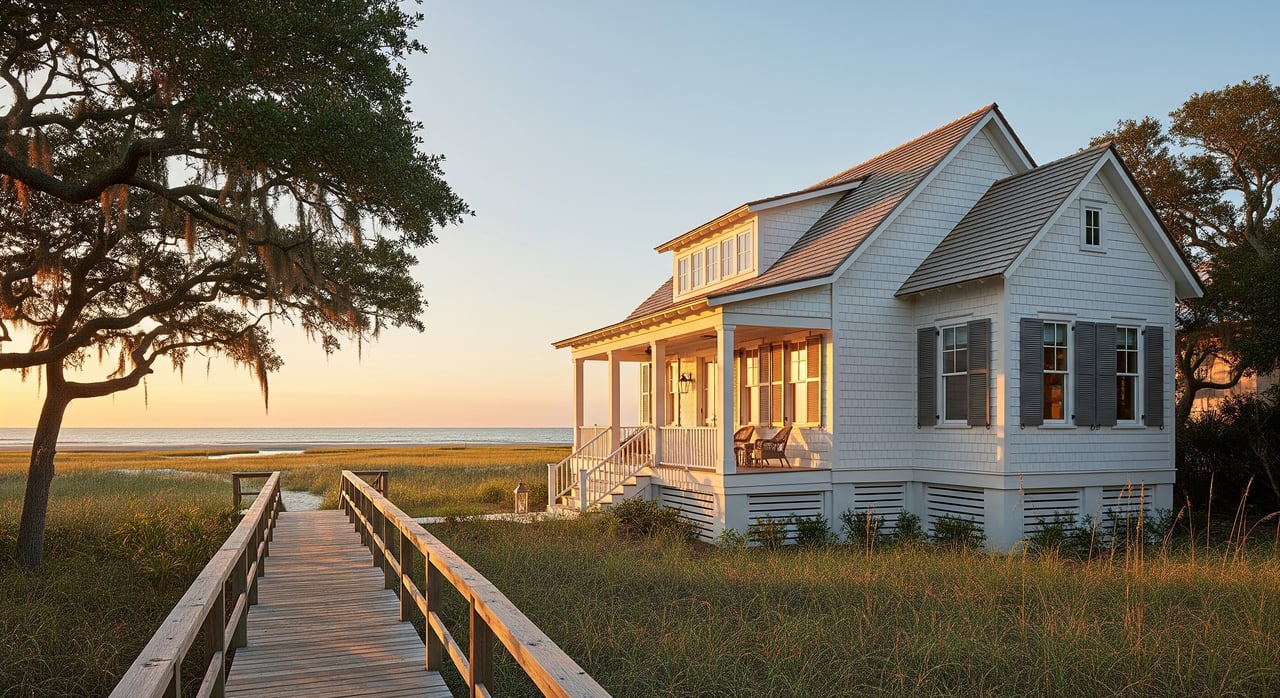
Dreaming about a place at Litchfield Beach where you can slip away for long weekends and summer gatherings? If you are an out‑of‑market buyer or a local planning a vacation retreat, the financing process can feel different from buying your primary home. You want clarity on loan types, down payments, insurance, and the rules that come with coastal properties.
In this guide, you will learn how lenders define a second home, which loan options are common, what cash to plan for, and how condo, flood, and rental policies can shape your approval. You will also find a simple checklist to move forward with confidence. Let’s dive in.
What lenders mean by “second home”
A second home is a property you intend to occupy in addition to your primary residence, often for vacations or regular personal use. Lenders treat second homes differently from both primary residences and investment properties.
- A second home is for your personal use, and it must be suitable for year‑round occupancy.
- An investment property is purchased mainly to generate rental income or without the intent to occupy. Investment loans carry higher down payments, stricter reserves, and higher rates.
- Why this matters: your occupancy category affects minimum down payment, required cash reserves, debt‑to‑income limits, mortgage insurance options, and whether short‑term rental use is allowed by the lender.
Common loan paths for Litchfield second homes
Conventional conforming loans
Conventional loans are the most common option for second homes. Many buyers qualify with a down payment in the 10 to 20 percent range, depending on credit, property type, and lender policy. Some lenders offer private mortgage insurance when your down payment is under 20 percent, though terms can differ from primary‑home coverage. Expect reserve requirements and tighter debt‑to‑income standards than a primary purchase.
Jumbo loans in Georgetown County
If your price point exceeds the current conforming loan limit for the county, you will look at jumbo financing. Jumbo second‑home loans often require 15 to 20 percent down or more, stronger credit, and higher reserves. Rates can be higher than conforming loans, especially at higher loan‑to‑value levels.
Programs not typical for vacation homes
FHA, VA, and USDA loans are designed for primary residences, so they are generally not used for second‑home purchases. If you plan to occupy a property as your main home, these programs can be discussed, but for a pure vacation property in Litchfield, they are not the routine path.
Portfolio loans and HELOCs
Some local and regional banks offer portfolio loans with their own rules on occupancy and rental use. Terms vary by institution. If you have strong equity in your current primary home, you might use a home equity line of credit or a cash‑out refinance to fund the down payment or even pay cash, then refinance later. Always confirm cash‑flow and tax implications with your lender and advisor.
Down payment, reserves, credit, and rates
Second‑home mortgages are underwritten more conservatively than primary residences. Here is what most buyers in Georgetown County can expect:
- Down payment: Many lenders start around 10 percent down for conforming second‑home loans, though 15 to 20 percent is common. Jumbo programs often require 15 to 25 percent down.
- Reserves: Plan to show 2 to 12 months of reserves, calculated as principal, interest, taxes, and insurance. Six months is a common starting point, and higher‑risk files or jumbo loans may require more.
- Credit and DTI: Strong credit helps. Mid‑700s often earn better pricing, while mid‑600s may be possible with larger down payments and higher rates. Many lenders prefer a debt‑to‑income ratio at or below 43 percent for a second home, with room for exceptions when you have strong compensating factors.
- Rates: Rates for second homes are typically a bit higher than for primary residences. The premium often ranges from a few basis points to a few tenths of a percent, and it can be higher for jumbo loans or higher loan‑to‑value ratios.
Condo vs. single‑family near the beach
Litchfield offers a mix of oceanfront condos and single‑family homes across Litchfield Beach, North Litchfield, and nearby neighborhoods. Your property type influences both underwriting and total cost.
Project approval and HOA health
Condo loans often require the project to meet specific eligibility standards. Lenders review the association’s budget, reserve funding, insurance coverage, and delinquency rates, and they look at the share of second‑home and rental use within the building. If a project is not eligible, you may still be able to finance through a portfolio program, but it can mean a larger down payment, more reserves, or a higher rate.
Insurance considerations
Coastal properties commonly sit in mapped flood zones. If a property is in a Special Flood Hazard Area and you finance through a regulated lender, flood insurance is typically mandatory. Premiums vary based on elevation, building type, and coverage level. For condos, review the master policy to understand what the association covers and whether you need an HO‑6 and separate flood coverage for the interior and contents. For single‑family homes, budget for homeowners, wind, and flood coverage that reflects coastal risk.
Appraisals and property features
Beach markets can have limited recent sales for a specific building or view, which may require a broader comparable set or additional appraisal review. For single‑family homes, elevation features such as pilings and flood vents, along with dune setbacks and other local requirements, can impact both value and insurability.
Flood zones, insurance, and taxes in Georgetown County
Flood exposure is a core cost driver in coastal South Carolina. Use current flood mapping resources or county GIS tools during due diligence to determine a property’s flood zone and likely insurance needs. Insurance costs can be a major part of your monthly budget, so ask your lender to model them into your pre‑approval.
South Carolina property taxes are generally moderate compared to many states, but coastal homeowners often face higher insurance premiums and storm deductibles. If you are buying a condo, ask about any upcoming association assessments so you can budget for the full cost of ownership.
Short‑term rental plans and lender rules
Many owners in coastal markets consider renting their home when they are not using it. For second‑home loans, lenders usually require personal use and may restrict short‑term rental activity. Some lenders prohibit short‑term rentals entirely on second‑home mortgages, while others allow limited use but will not count that income to help you qualify. If rental income is part of your plan, disclose it early and confirm that the property’s HOA and local rules allow it.
Timeline and closing tips for out‑of‑market buyers
Resort‑area appraisals can take longer during busy seasons. If you are financing a condo, allow extra time for the lender’s project review and for obtaining HOA documents and certificates of insurance. Title and survey work may also include coastal easements, setback lines, or access items that deserve careful review. Build a buffer into your closing timeline, especially if you are coordinating travel to preview or close in person.
Two practical financing strategies
- Conventional second‑home loan: Many Litchfield buyers choose a conventional loan with 10 to 20 percent down, plus reserves. This is the most straightforward path when the condo project is eligible or when you are buying a single‑family home.
- HELOC or portfolio alternative: If project approval is uncertain or you want more flexibility on rental use, consider using equity from your primary home for the down payment or explore a portfolio loan from a local or regional bank. Expect different reserve and rate structures, and plan for the possibility of a higher down payment.
Your Litchfield buyer checklist
- Clarify your use: second home for personal enjoyment or primarily for rental. Your answer sets the loan path.
- Set a budget that includes insurance: model homeowners, wind, and flood premiums along with HOA dues and potential assessments.
- Plan your down payment and reserves: target 10 to 20 percent down, and be ready to document 2 to 12 months of reserves.
- Get pre‑approved with a lender experienced in coastal second homes: ask about condo project reviews, reserve requirements, and rate differences.
- If buying a condo, request HOA docs early: budget, reserves, insurance certificates, rental rules, and any pending assessments.
- Review flood mapping and elevation data: understand how zone and elevation influence premiums and coverage.
- Confirm rental policies: align lender rules with HOA and local regulations if you plan any short‑term rentals.
- Allow time for appraisals and approvals: build in a buffer during peak seasons.
- Assemble your local team: a knowledgeable agent, a lender versed in second‑home financing, an insurance broker familiar with coastal coverage, and an attorney or title company with coastal experience.
Next steps
Buying a second home in Litchfield should feel exciting and well‑planned, not rushed. With the right financing strategy and a local guide who understands Georgetown County’s coastal nuances, you can move from idea to keys with confidence. If you are ready to explore properties or want a short list of trusted lenders and insurance partners, connect with Mariah Johnson & Hampton Roberts for a personalized consultation.
FAQs
Can I get a mortgage for a Litchfield beach house if I live out of state?
- Yes. Conventional lenders regularly finance second homes for out‑of‑market buyers, but expect a down payment often in the 10 to 20 percent range, reserves, and proof that you intend to use the home personally.
Will my second‑home interest rate be higher than my primary mortgage?
- Usually yes. Second‑home loans often carry a modest rate premium that can increase for jumbo loans, higher loan‑to‑value ratios, or lower credit scores.
Do condos in Litchfield have different financing rules than single‑family homes?
- Often. Condo projects must meet lender eligibility standards, and the HOA’s financials and insurance are reviewed. If a project is not eligible, you may need a higher down payment or a portfolio loan.
Can I use short‑term rental income to qualify for a second‑home loan?
- Lenders often limit or prohibit counting short‑term rental income for second‑home mortgages and may restrict short‑term rental activity. Share your plans early to confirm what is allowed.
Is flood insurance required for coastal homes in Georgetown County?
- If your financed property is in a mapped Special Flood Hazard Area, lenders typically require flood insurance. Premiums vary based on elevation, building type, and coverage.
How much cash should I plan for beyond the down payment?
- In addition to closing costs, plan for 2 to 12 months of reserves, with six months being common. Also budget for homeowners, wind, and flood insurance, and any HOA dues or assessments.